49 CFR Part 172: Hazmat Shipping Compliance Guide

Every shipment must comply with 49 CFR Part 172, shipping papers, labels, placards, training, and a 24-hour emergency phone number. No exceptions.

Last updated: Reviewed by Hazmat Line's regulatory team

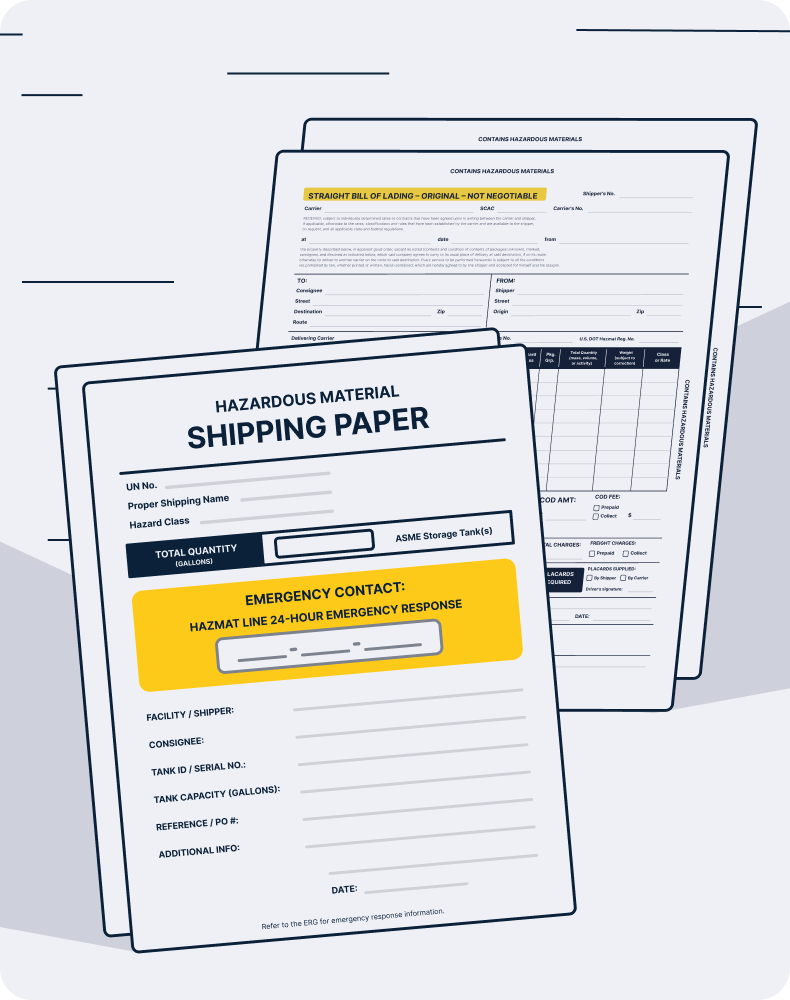
Hazardous material shipping paper with the Hazmat Line emergency number

Quick answer

Offering hazardous materials for transport by road, rail, air, or sea?

49 CFR Part 172 is the operational compliance standard for every hazardous materials shipment offered for transport in the United States. It mandates shipping papers with the proper shipping name, hazard class, and UN number; DOT-compliant labels and placards; employee training records; and a 24-hour monitored emergency telephone number under § 172.604 on every shipping paper. Failure to comply exposes both shippers and carriers to civil penalties of up to $102,348 per violation per day, with typical first-offense assessments in the $1,600 to $7,500 range per violation under PHMSA's penalty guidelines.

Source: 49 CFR Part 172 Subparts C, D, E, F, G, H, Pipeline and Hazardous Materials Safety Administration (PHMSA)

Who Must Comply with 49 CFR Part 172?

Hazardous materials regulations exist because the materials involved, flammable liquids, corrosives, toxic gases, lithium batteries, carry genuine risks to people, the environment, and infrastructure during transport. 49 CFR Part 172 applies to any person who offers hazardous materials for transportation in commerce. If you tender a hazmat package to any carrier, truck, rail, air, or sea, these requirements are legally mandatory for every shipment.

Part 172 compliance is separate from PHMSA annual registration

Some companies that ship above certain quantity thresholds are also required to file an annual registration statement with PHMSA and pay a fee under 49 CFR §§ 107.601, 107.620. That is a separate program. Part 172 compliance applies to every hazmat shipment regardless of whether annual registration is required. Completing the annual PHMSA registration does not satisfy any Part 172 requirement. See our PHMSA hazmat registration guide for the fee program details.

  • This applies to you if…

    • You ship any quantity of Class 1 (explosives), Class 2 (gases), Class 3 (flammable liquids), or Class 7 (radioactive) materials
    • You ship lithium batteries, including consumer electronics, EV components, or standalone cells (UN3480, UN3481)
    • You ship Class 4, 5, 6, 8, or 9 materials above the reportable threshold
    • You are a manufacturer, distributor, or retailer who tenders hazmat packages to a carrier
    • Your company ships dangerous goods originating from the United States by any mode of transport
  • Full Part 172 may not apply if…

    • Your material qualifies for the limited quantity (LQ) exception under Part 173 and you use the square-on-point mark for ground transport only
    • Your shipment meets the small quantity (SQ) exception under 49 CFR 173.4
    • Your material is a consumer commodity (ORM-D) exception
    • You qualify as a Materials of Trade (MOT) operator under 49 CFR 173.6, carrying small quantities on a vehicle for your own operational use (e.g. a plumber carrying propane)
    • You are transporting materials solely for personal use, not in commerce
What are Materials of Trade (MOT)?

Materials of Trade are hazardous materials a person carries on a motor vehicle for operational purposes, not for commercial sale or delivery to a customer. Examples include a contractor carrying a small propane cylinder for a torch, or a pest control operator carrying a pesticide for their own use. MOTs have strict quantity limits and do not require shipping papers, labels, or placards, but they must be properly packaged and the driver must be trained. See the PHMSA MOT brochure for full details.

The one requirement that almost always applies

Even when certain Part 172 requirements are reduced or waived (such as under the limited quantity exception), the 24-hour monitored emergency telephone number reinstates the moment shipping papers are required, including air, vessel, and any shipment involving a hazardous substance, hazardous waste, or marine pollutant. Separately, OSHA (29 CFR 1910.1200) requires a 24-hour emergency number in Section 1 of every Safety Data Sheet, independent of how or whether you ship.

Why the 24-hour emergency phone number is more than a legal checkbox

When a truck carrying hazardous materials is involved in an accident, the first call a firefighter or paramedic makes is to the emergency number printed on the shipping paper. That number connects them to someone who can tell them exactly what they're dealing with, what protective equipment to use, how to contain a spill, whether to evacuate the area, what not to mix with water.

If that number rings unanswered, or connects to voicemail, responders are working blind. That's when a manageable incident becomes a serious one. 49 CFR § 172.604 exists because that call must get through. It requires a number that is monitored 24 hours a day, 365 days a year, by someone with knowledge of the chemical, not a general answering service, not a business-hours line.

Need a compliant 24-hour emergency phone number for your shipments?

Hazmat Line provides a registered 24-hour emergency response service for shippers across all hazard classes, with immediate setup and transparent pricing.

  • What qualifies as a compliant number

    • Monitored at all times the material is in transport, including storage incidental to transport
    • Answered immediately by a person with knowledge of the hazardous material
    • Capable of providing emergency response and incident mitigation guidance
    • For US domestic shipments: must include area code
    • May be a registered third-party emergency response provider
  • What does not qualify

    • Voicemail or answering machine at any time
    • Company main line monitored only during business hours
    • An answering service without chemical hazard knowledge
    • A mobile phone that may be switched off or out of range
    • A number that connects to someone with no knowledge of the material

All Six 49 CFR Part 172 Requirements

Hazmat regulations are detailed by design. Hazardous materials carry inherent risks, explosion, fire, toxicity, environmental contamination, and each requirement below exists to give first responders, carriers, and the public the information and protection they need if something goes wrong. Every hazmat shipment must satisfy all six. Missing any single item is a separate violation, assessed per shipment.

  1. Shipping papers, § 172.200, 172.205

    Every hazmat shipment must include a shipping paper (bill of lading, air waybill, or manifest) containing the proper shipping name, hazard class or division, UN identification number, packing group, and total quantity. The document must also include the 24-hour emergency telephone number.

    Why it matters: Shipping papers are the first document a first responder reaches for at an incident scene. They identify the material, the hazard, and who to call for guidance, in under 30 seconds.

  2. Hazmat labels, § 172.400, 172.407

    Each package must display the correct DOT hazard class label, the diamond-shaped label corresponding to the material's primary and subsidiary hazard classification. Labels must be durable, clearly visible, and meet minimum size requirements (100 mm × 100 mm). They must not be obscured by other markings or packaging.

    Why it matters: Labels communicate the primary hazard before anyone opens a box or reads a document. In a fire, spill, or collision, a visible hazard diamond tells responders within seconds what they're dealing with and what not to do.

  3. Placards on transport vehicles, § 172.500, 172.558

    Transport vehicles carrying hazmat above threshold quantities must display placards on all four sides of the vehicle exterior. Placard type and applicability vary by hazard class and total quantity. Some materials require placards regardless of quantity (Class 1, Class 2.3, Class 7); others have a 1,001 lb aggregate threshold.

    Why it matters: Placards alert emergency services from a distance, before they approach a vehicle. They allow fire departments to deploy the right response and evacuation decisions before anyone is at risk.

  4. Employee training records, § 172.700, 172.704

    All employees who prepare, handle, or transport hazardous materials must complete DOT hazmat training covering general awareness, function-specific, safety, and security topics. Records must be kept on file and available for inspection during employment and for 90 days after. Training must be refreshed at least every three years.

    Why it matters: The most common cause of hazmat incidents is human error, misclassification, improper packaging, or missing paperwork. Trained employees catch those errors before they reach the road.

  5. Emergency response information, § 172.600, 172.602

    Immediate hazard information must accompany every shipment, including response guidance for fire, spill, and first aid. Typically satisfied by providing an Emergency Response Guide (ERG) reference, a Safety Data Sheet (SDS), or a written document with the required information to the carrier.

    Why it matters: Written response information gives responders actionable guidance even when the emergency phone line is busy or not yet reached. It's the fallback that can save lives while the call is being made.

  6. 24-hour monitored emergency telephone number, § 172.604

    Every shipping paper must include a telephone number monitored at all times, 24 hours a day, 7 days a week, including nights, weekends, and holidays, by a person with immediate knowledge of the hazardous material or access to a person who does. A voicemail or general answering service does not comply.

    Why it matters: When an incident happens at 2 AM on a Sunday, a fire captain needs a live person on the phone within seconds, not a recording. This number is the direct line between the incident scene and the chemical expertise that determines how responders act. It is the requirement Hazmat Line fulfills.

    • Must be answered by a live person at any hour, not voicemail
    • Responder must have specific knowledge of the material being shipped
    • Most shippers satisfy this by contracting with a registered third-party emergency response provider

Need the number itself? From $599/yr, active within 24 hours.

Get started

The Real Cost of Non-Compliance

The biggest cost is not the fine

Financial penalties are serious, but the real cost of non-compliance is what happens when an incident occurs and responders can't get information fast enough. When a hazmat spill or vehicle fire goes unmanaged because no one answered the emergency line, the impact on human life, the environment, and property can be incalculable. The regulations exist precisely to prevent this. Fines are the enforcement mechanism. Safety is the reason.

Penalties are enforced by PHMSA (Pipeline and Hazardous Materials Safety Administration) and FMCSA (Federal Motor Carrier Safety Administration). Both shippers and carriers can be fined, shippers for non-compliant documentation and packaging, carriers for transporting shipments they knew or should have known were non-compliant. Fines are assessed per violation, per shipment.

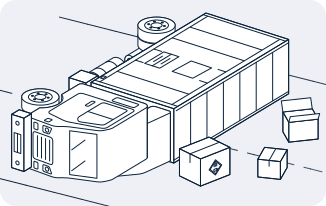
Overturned hazmat truck after a road incident
  • $102,348

    Statutory max per violation

  • Per shipment

    How fines are assessed

  • Retroactive

    Audits can go back in time

  • Baseline ranges from PHMSA's 2013 penalty guidelines (78 FR 60738), adjusted periodically for inflation.

    Violation typeDescriptionShipper fine
    Missing emergency phone numberNo 24-hour number printed on shipping paper$4,000, $7,500
    Non-monitored phone numberNumber goes to voicemail or rings unanswered outside business hours$1,600, $4,000
    Inadequate phone serviceNumber answered but responder lacks chemical hazard knowledge$3,200, $5,200
    Incorrect emergency response informationWrong chemical data provided to first responders$3,700, $7,500
    Missing hazmat labelsPackage tendered without required DOT hazard class label$3,200, $7,500
    Missing or incomplete shipping papersShipping paper omits proper name, UN number, class, PG, or quantity$3,200, $7,500
    Untrained hazmat employeeEmployee performing regulated function without required DOT training on file$4,000, $7,500

The per-shipment multiplier effect

Fines are assessed per violation per shipment. A company making 50 hazmat shipments per month with a non-monitored emergency number could face $80,000 to $200,000 in cumulative fines from a single PHMSA audit, before accounting for parallel carrier fines and potential civil liability if an incident occurred. The annual cost of a compliant emergency response provider is a fraction of a single fine.

$80K to $200Kin fines from one audit, at 50 shipments a month
PHMSA audit authority is broad and retroactive

PHMSA inspectors can review shipping records retroactively and assess penalties for each non-compliant shipment in the audit window. Violations discovered in the context of an incident investigation, where someone was injured or property was damaged, are assessed at the highest penalty range and may also trigger civil litigation from affected third parties.

Official sources for PHMSA penalty guidelines

Fine ranges are derived from published PHMSA penalty guidelines: Federal Register, Hazardous Materials Regulations: Penalty Guidelines (2013) and the DOT Civil Penalties Tables (May 2024). Penalty amounts are periodically adjusted for inflation.

Notable Requirements by Hazard Class

All six Part 172 requirements apply across hazard classes, but some categories carry elevated enforcement priority or nuances shippers frequently miss.

  • Lithium batteries, Class 9 (UN3480, UN3481)

    The fastest-growing hazmat category. All lithium batteries classified under 49 CFR require a compliant 24-hour emergency phone number on shipping papers. PHMSA has significantly increased enforcement since 2022. Shippers frequently assume small battery shipments are exempt, they are not unless they meet specific excepted quantity thresholds.

  • Class 3, Flammable liquids (paints, solvents, adhesives)

    One of the most commonly shipped hazmat classes. Shippers using the LQ exception for ground transport may inadvertently ship air or vessel without reinstating full Part 172 requirements, including shipping papers and the 24-hour phone number. Multi-modal shippers need a compliant number in place at all times.

  • Class 8, Corrosives (battery acid, cleaners)

    Corrosives require particular care with labeling, the corrosive diamond must appear on each package, and orientation arrows are required for liquid corrosives. A compliant 24-hour emergency phone number is mandatory for all fully regulated shipments. First responders are frequently injured by corrosives when response information is unavailable at the scene.

  • Hazardous substances & marine pollutants

    If your material is also a hazardous substance under CERCLA or a marine pollutant, shipping papers reinstate, even if you use the LQ mark. This frequently overlooked trigger brings the full emergency phone number requirement back into force regardless of mode.

Not sure if your shipment requires a 24-hour emergency phone number?

Our team can review your shipping profile, check the Hazardous Materials Table, and confirm your compliance obligations, no commitment required.

Frequently asked questions

What is DOT hazmat registration?

DOT hazmat registration is the first step in becoming a compliant hazardous materials shipper. Depending on your operation, it includes registering with the Department of Transportation, paying an annual fee, and then maintaining ongoing compliance with 49 CFR Part 172, which covers shipping papers, labeling, placarding, employee training, and a 24-hour monitored emergency telephone number on every shipping paper.

Can I use my own phone number for § 172.604 compliance?

Only if it is monitored 24 hours a day, 7 days a week, by a person with immediate knowledge of or access to hazmat response information for the specific material being shipped. Most company main lines and personal mobile phones do not meet this standard outside business hours. Most shippers satisfy this requirement by contracting with a registered third-party emergency response provider under § 172.604(c)(2).

What happens if I ship hazmat without an emergency response number?

PHMSA can issue fines of $4,000 to $7,500 per violation, per shipment to the shipper. The statutory maximum is $102,348 per violation, per day ($238,809 if the violation results in death or serious injury). Carriers can also be fined for transporting non-compliant shipments. Beyond the financial penalty, the real risk is that when first responders cannot reach someone with chemical knowledge during an incident, a manageable situation can escalate rapidly, with consequences to human life, the environment, and property that far exceed any fine.

Does § 172.604 apply to lithium battery shipments?

Yes. Lithium batteries classified as hazardous materials under 49 CFR, including UN3480 (lithium ion batteries) and UN3481 (lithium ion batteries packed with or contained in equipment), require a compliant 24-hour monitored emergency telephone number on shipping papers. PHMSA has significantly increased enforcement in this category, particularly for e-commerce and consumer electronics shippers.

What are Materials of Trade and are they exempt?

Materials of Trade (MOTs) are hazardous materials a person carries on a motor vehicle for operational purposes, not for commercial delivery to a customer. Examples include a plumber carrying a small propane cylinder or a pest control operator carrying a pesticide for their own use. MOTs are partially exempt from Part 172 under 49 CFR 173.6, with strict quantity and packaging limits. They do not apply to commercial hazmat shipments. See the PHMSA MOT brochure for full eligibility details.

Are carriers also fined for hazmat non-compliance?

Yes. FMCSA enforces hazmat compliance at roadside inspections for motor carriers, and both PHMSA and FMCSA can issue penalties to carriers for transporting non-compliant shipments. Carrier fines are generally issued for violations discovered during transport, missing placards, non-compliant shipping papers, or carrying a load with a non-functional emergency number. Shipper and carrier penalties are assessed independently and can be issued simultaneously for the same shipment.

Do I need a 24-hour emergency number on my Safety Data Sheet?

Yes, if your company name appears on the Safety Data Sheet as manufacturer, formulator, or private labeler. OSHA's Hazard Communication Standard (29 CFR 1910.1200) requires a 24-hour emergency telephone number in Section 1 of every SDS. This is a separate legal obligation from the DOT § 172.604 requirement, it applies regardless of how or whether the product is shipped, and is not waived by the limited quantity exception.

What is the per-shipment multiplier effect for PHMSA fines?

PHMSA fines are assessed per violation per shipment, not as a one-time penalty. A company making 50 hazmat shipments per month with a non-monitored emergency number has committed 50 separate violations. At $1,600 to $4,000 per violation, that is $80,000 to $200,000 in potential fines from a single audit, before accounting for carrier penalties and civil liability if an incident occurred. PHMSA's audit authority is retroactive, meaning past shipments are also subject to penalty.

Get your shipments fully compliant with 49 CFR Part 172

Hazmat Line provides a registered 24-hour emergency response service for shippers across all hazard classes, with immediate setup, transparent pricing, and no hidden fees.